




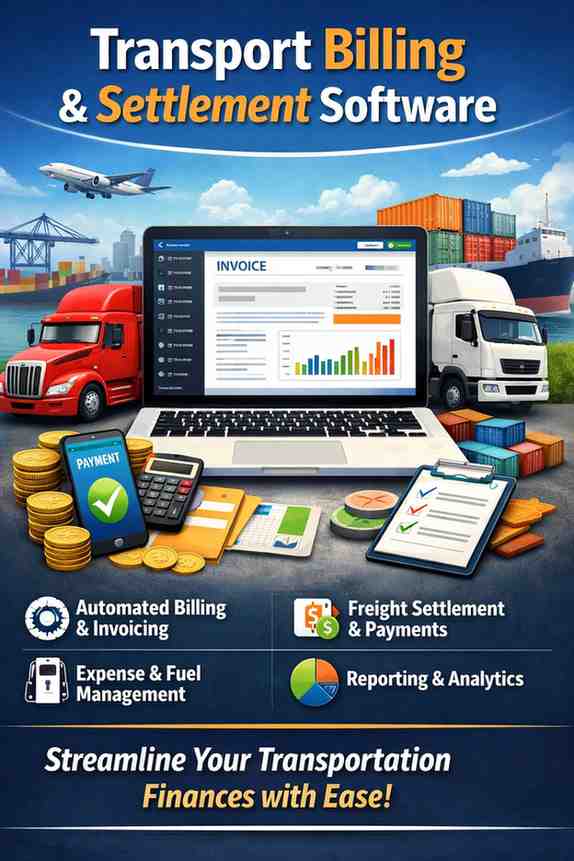
Transport Billing & Settlement Software: Bringing Accuracy, Speed, and Control to Modern Logistics
The transportation and logistics industry runs on thin margins, high volumes, and constant coordination between shippers, carriers, brokers, and finance teams. In this environment, billing errors, delayed settlements, and manual reconciliation are not just operational issues. They directly impact cash flow, trust, and long-term profitability. This is where Transport Billing & Settlement Software becomes a critical business enabler rather than just a back-office tool.
The Growing Complexity of Transport Billing
Transport billing is no longer a simple invoice generation process. Modern logistics operations involve multiple rate contracts, fuel surcharges, accessorial charges, taxes, tolls, and regulatory requirements. Add multimodal transport, cross-border shipments, and third-party carriers, and the billing landscape becomes highly complex.
Manual processes or disconnected systems struggle to keep up with this complexity. They often lead to duplicate billing, missed charges, delayed approvals, and disputes with partners. Over time, these inefficiencies erode margins and slow down settlements. A structured, automated billing system is no longer optional for companies aiming to scale.
What Transport Billing & Settlement Software Really Does
At its core, Transport Billing & Settlement Software automates the entire lifecycle of transport financial transactions. This includes rate validation, invoice generation, exception handling, approvals, settlements, and reporting.
Instead of relying on spreadsheets or fragmented tools, businesses gain a centralized platform that aligns operational data with financial rules. Shipment details, delivery confirmations, and contract rates flow directly into billing workflows. The result is faster invoicing, fewer disputes, and predictable settlement cycles for all stakeholders.
Key Business Benefits for Logistics and Transport Companies
Improved Billing Accuracy
Automated rate matching ensures that every invoice aligns with predefined contracts and tariffs. This drastically reduces overbilling or underbilling, protecting both revenue and customer trust.
Faster Settlement Cycles
With automated approvals and digital workflows, settlements that once took weeks can be completed in days. This improves cash flow and strengthens relationships with carriers and vendors.
Reduced Operational Overhead
Finance teams spend less time reconciling invoices and more time on analysis and optimization. This translates into lower processing costs and better resource utilization.
Better Dispute Management
When discrepancies arise, the system provides clear audit trails, documentation, and data visibility. Disputes can be resolved faster with facts rather than assumptions.
Supporting Scalability and Business Growth
As transport businesses grow, transaction volumes increase exponentially. Manual billing processes do not scale at the same pace. Transport Billing & Settlement Software is designed to handle high volumes without compromising accuracy or control.
Whether a company operates regionally or across multiple countries, the software adapts to different pricing models, currencies, and compliance requirements. This flexibility allows organizations to expand operations without rebuilding their financial infrastructure every time.
Data Visibility and Strategic Insights
Beyond billing and settlement, modern solutions offer advanced reporting and analytics. Management teams gain visibility into cost structures, carrier performance, route profitability, and billing trends.
These insights support better decision-making. Companies can renegotiate contracts, optimize routes, and identify leakage points that were previously hidden in manual records. Over time, this data-driven approach leads to stronger financial discipline and competitive advantage.
Customer Experience and Partner Trust
Accurate and timely billing directly impacts customer satisfaction. Shippers expect transparent invoices, while carriers value prompt and predictable settlements. A reliable billing system ensures consistency on both sides.
When customers and partners trust the billing process, relationships become smoother and long-term collaboration becomes easier. This trust is a significant differentiator in a highly competitive logistics market.
Integration with Existing Transport Systems
Modern transport billing platforms are designed to integrate seamlessly with TMS, ERP, GPS tracking, and warehouse systems. This ensures that billing is not an isolated function but part of an integrated digital ecosystem.
Such integration eliminates data silos and ensures that operational events automatically trigger financial actions. The result is a unified flow from shipment execution to final settlement.
Conclusion
In an industry where efficiency, transparency, and speed define success, Transport Billing & Settlement Software plays a central role in transforming financial operations. By reducing errors, accelerating settlements, and providing actionable insights, it helps transport and logistics businesses protect margins, strengthen relationships, and scale with confidence.

