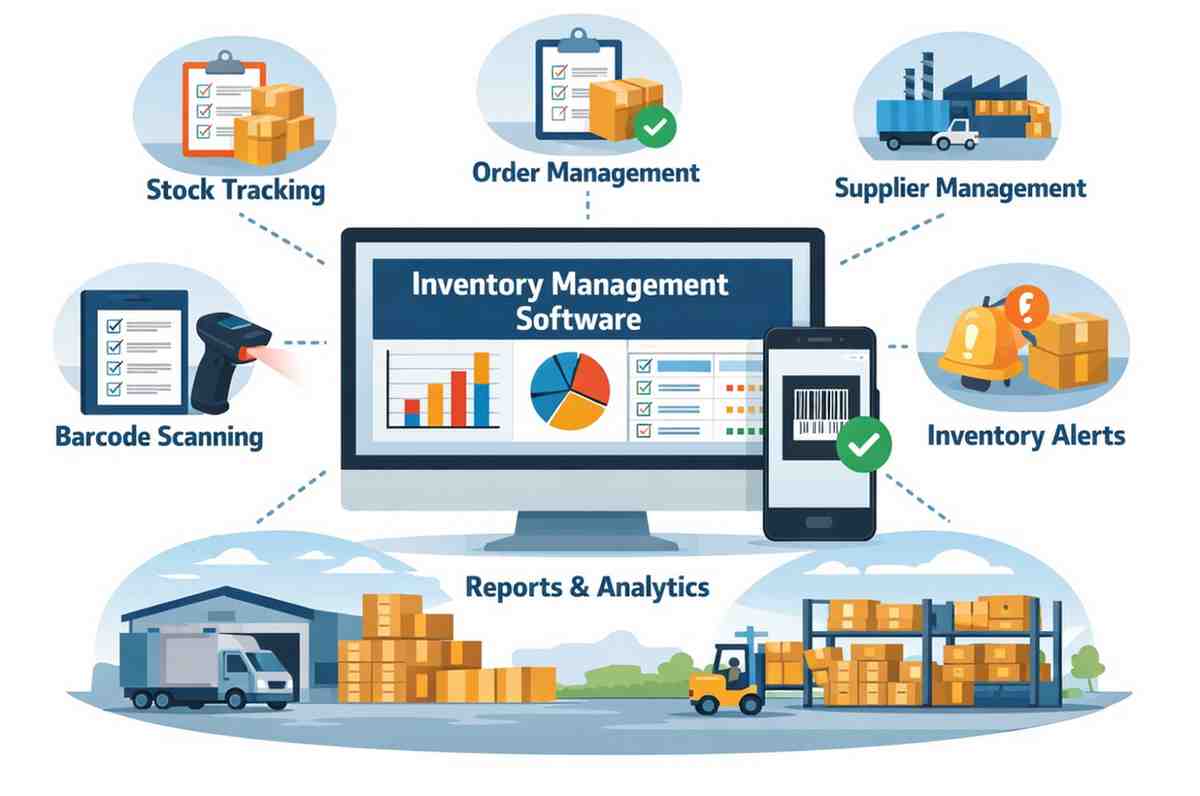
Inventory Management Software: A Strategic Backbone for Modern Businesses In today’s fast moving commercial environment, businesses face constant pressure to reduce costs, improve efficiency, and respond quickly to customer demand. One of the most critical yet complex areas influencing these goals is inventory control. This is where Inventory Management Software becomes a strategic asset rather than just an operational tool. From small retailers to large manufacturing enterprises, digital inventory systems now play a central role in business stability and growth. Understanding Inventory Management Software At its core, Inventory Management Software is designed to track, manage, and optimize stock levels across one or multiple locations. Unlike traditional spreadsheet based methods, modern software solutions provide real time visibility into inventory movement, stock valuation, and demand trends. This allows decision makers to replace guesswork with accurate, data driven insights. The software typically integrates with sales systems, procurement platforms, warehouses, and accounting tools. This integration ensures that inventory data remains consistent across departments, reducing manual errors and improving coordination between teams. Why Inventory Accuracy Matters More Than Ever Inaccurate inventory data directly impacts customer satisfaction and revenue. Overstocking ties up working capital and increases storage costs, while understocking leads to missed sales and damaged customer trust. Inventory Management Software addresses these challenges by continuously updating stock levels and alerting teams when action is required. With real time tracking, businesses can align purchasing decisions with actual demand. This is especially valuable in industries with seasonal fluctuations, short product lifecycles, or complex supply chains. Accurate inventory data also supports better forecasting, helping organizations prepare for future demand without unnecessary risk. Key Features That Drive Business Value Modern inventory management platforms go beyond simple stock counting. They offer a range of features designed to improve operational efficiency and decision making. Automated stock updates eliminate manual data entry and reduce human error. Barcode and RFID integration speeds up receiving, picking, and dispatch processes. Demand forecasting tools analyze historical data to predict future needs, while reorder point automation ensures that critical items are replenished on time. Reporting and analytics dashboards provide visibility into slow moving items, fast sellers, and inventory turnover ratios. These insights enable managers to optimize product mix and pricing strategies, directly improving profitability. Cost Control and Operational Efficiency One of the strongest arguments for adopting inventory management software is cost control. Carrying excess inventory increases storage, insurance, and obsolescence costs. On the other hand, frequent stockouts often result in emergency procurement at higher prices. By maintaining optimal stock levels, businesses can reduce waste and improve cash flow. Automated workflows also reduce the administrative burden on staff, allowing teams to focus on higher value activities such as supplier negotiation and customer service. Over time, these efficiency gains translate into measurable financial benefits. Supporting Scalability and Business Growth As businesses grow, inventory complexity increases. Managing multiple warehouses, sales channels, or product categories manually quickly becomes unsustainable. Inventory Management Software provides the scalability needed to support expansion without proportional increases in operational overhead. Cloud based solutions are particularly valuable for growing organizations. They allow real time access to inventory data from any location, support multi location stock management, and integrate easily with ecommerce platforms and ERP systems. This flexibility enables businesses to scale confidently while maintaining control over inventory operations. Enhancing Customer Experience Inventory management is not just an internal function. It directly affects the customer experience. Accurate stock information ensures reliable delivery timelines, reduces order cancellations, and builds trust with customers. When customers know that a business can consistently meet its commitments, loyalty and repeat purchases increase. Inventory software also supports faster order fulfillment by streamlining picking and packing processes. In competitive markets where delivery speed matters, this operational advantage can be a key differentiator. Data Driven Decision Making Perhaps the most transformative aspect of inventory management software is its role in strategic decision making. By centralizing inventory data, businesses gain a clear picture of performance across products, locations, and time periods. This visibility supports informed decisions related to procurement, pricing, promotions, and supplier relationships. Advanced systems use analytics and machine learning to identify patterns and anomalies that may not be visible through manual analysis. These insights help businesses respond proactively rather than reactively to market changes. Conclusion In an era where efficiency, accuracy, and responsiveness define business success, Inventory Management Software is no longer optional. It serves as a foundation for cost control, customer satisfaction, and sustainable growth. Organizations that invest in the right inventory solution position themselves to operate smarter, scale faster, and compete more effectively in an increasingly digital marketplace.
