




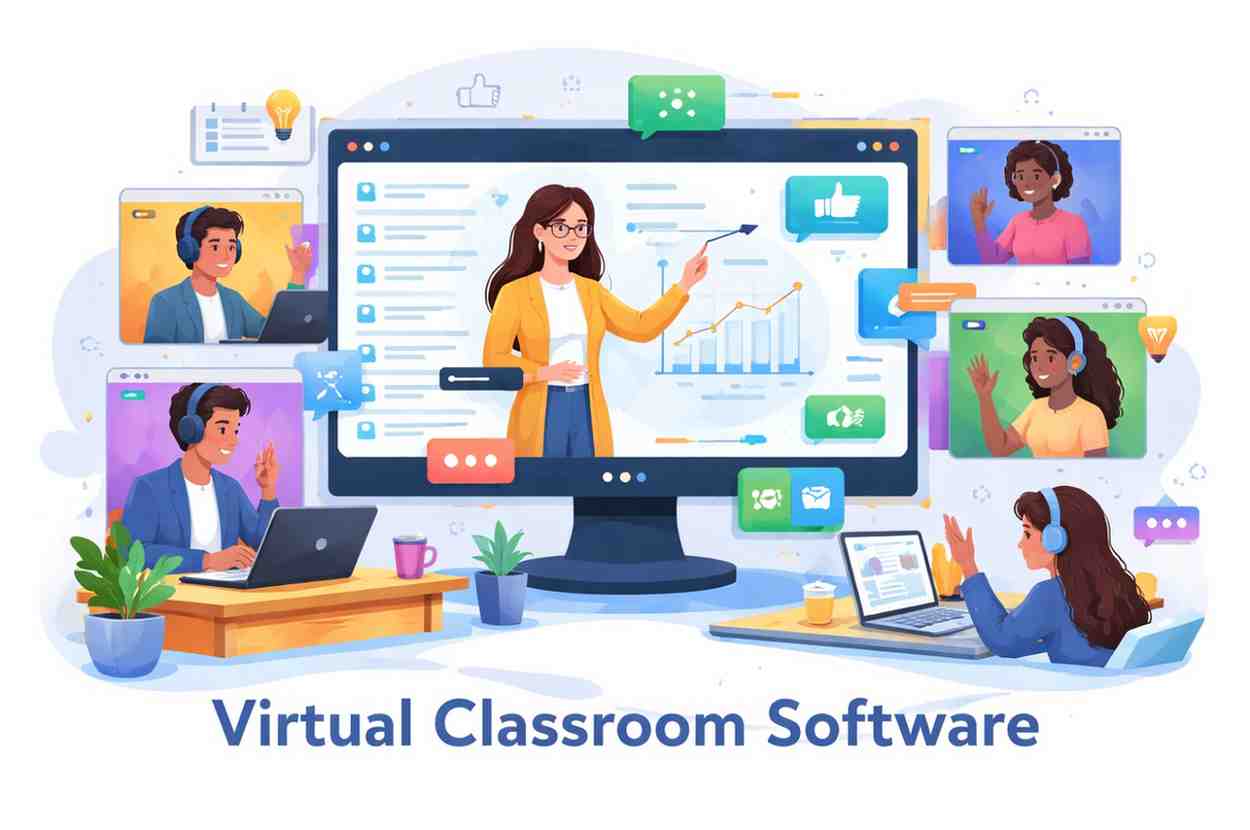
Virtual Classroom Software: Transforming Digital Learning for Modern Education
The education landscape has undergone a major shift in recent years. Institutions, training providers, and enterprises are no longer limited by physical classrooms or fixed schedules. Virtual classroom software has emerged as a core digital infrastructure that enables interactive, scalable, and flexible learning experiences. However, not all solutions fit every learning model. This is where Customized Virtual Classroom Software plays a decisive role in meeting specific educational and business needs.
Understanding Virtual Classroom Software
Virtual classroom software is an online learning environment that replicates traditional classroom interactions through digital tools. It supports live video sessions, real-time collaboration, content sharing, assessments, and learner tracking. Unlike static learning management systems, virtual classrooms emphasize engagement, communication, and immediate feedback.
Standard off-the-shelf platforms often come with predefined features and limitations. While they work for basic use cases, growing institutions and businesses quickly realize the need for deeper control, branding, and workflow alignment. This demand has accelerated the adoption of Customized Virtual Classroom Software designed around specific learning objectives.
Why Customization Matters in Digital Learning
Every educational organization operates differently. Universities, coaching centers, corporate training teams, and edtech startups all have unique teaching methods, compliance requirements, and audience expectations. Generic platforms force users to adapt their processes to the software, which often reduces efficiency and learner satisfaction.
Customized solutions allow organizations to define how learning happens. From tailored dashboards and role-based access to custom reporting and third-party integrations, Customized Virtual Classroom Software ensures that technology supports the learning strategy rather than restricting it.
Customization also enhances brand identity. A white-labeled platform with personalized UI elements builds trust and consistency, especially for institutions competing in a crowded digital education market.
Core Features of an Effective Virtual Classroom Platform
A well-designed virtual classroom system combines functionality, usability, and performance. Some essential features include:
-
Live video and audio sessions with low latency and screen sharing
-
Interactive tools such as chat, polls, quizzes, and digital whiteboards
-
Content management for recordings, notes, and learning materials
-
Assessment and evaluation tools with automated and manual grading
-
Analytics and reporting to track learner progress and engagement
When these features are customized to match organizational workflows, the learning experience becomes more intuitive for both instructors and learners. Customized Virtual Classroom Software enables institutions to prioritize the features that matter most to their audience while avoiding unnecessary complexity.
Benefits for Educational Institutions and Businesses
From a customer perspective, the value of virtual classroom software lies in measurable outcomes. Customized platforms deliver several long-term benefits:
Improved learner engagement: Interactive tools and tailored interfaces encourage participation and reduce dropout rates.
Operational efficiency: Automation of scheduling, attendance, and reporting saves time and administrative effort.
Scalability: Custom-built systems can grow with the organization, supporting new courses, users, and geographies.
Data-driven decisions: Advanced analytics provide insights into learner behavior, course effectiveness, and instructor performance.
For corporate training teams, customization also supports compliance tracking, internal integrations, and secure access controls, which are often missing in generic platforms.
Security, Compliance, and Performance Considerations
Security and data privacy are critical in digital learning environments. Institutions handle sensitive student data, intellectual property, and recorded sessions. Customized virtual classroom solutions allow organizations to define their own security protocols, data storage policies, and compliance standards.
Performance optimization is another key factor. A platform designed for a specific user base performs better under real-world conditions than a one-size-fits-all solution. Custom architecture ensures smooth streaming, faster load times, and consistent user experience even during peak usage.
Choosing the Right Development Approach
Selecting the right development partner is as important as choosing the technology itself. A reliable provider focuses on understanding educational goals, user journeys, and long-term scalability. The development process should include requirement analysis, UX design, iterative testing, and post-launch support.
Organizations should also consider future upgrades such as AI-driven learning recommendations, multilingual support, and mobile-first access. A flexible customization approach ensures the platform remains relevant as learning models evolve.
Conclusion
Virtual classroom software is no longer a temporary solution but a strategic investment in modern education and training. Institutions that want control, scalability, and a superior learning experience increasingly rely on Customized Virtual Classroom Software to align technology with their unique goals and audience expectations.

