Real estate pain points
The operational and commercial problems developers and property managers actually face.
In real estate, poor infrastructure does not stay invisible. It shows up as construction loss, resident complaints, tenant dissatisfaction, weak facility control, lower trust at site visits, and poor lead conversion when the market sees the project as ordinary instead of professionally planned.
Construction site theft and material loss
During active construction, sites remain exposed to unauthorized access, material movement disputes, equipment misuse, and after-hours loss when there is no structured site monitoring.
Operational impact: direct financial leakage, contractor disputes, and poor control during critical build stages.
Gated community expectations rising faster than infrastructure
Buyers and residents increasingly expect secure entries, working cameras, reliable visitor systems, and stable connectivity as standard features, not premium extras.
Operational impact: lower satisfaction, more society complaints, and reduced confidence in property management quality.
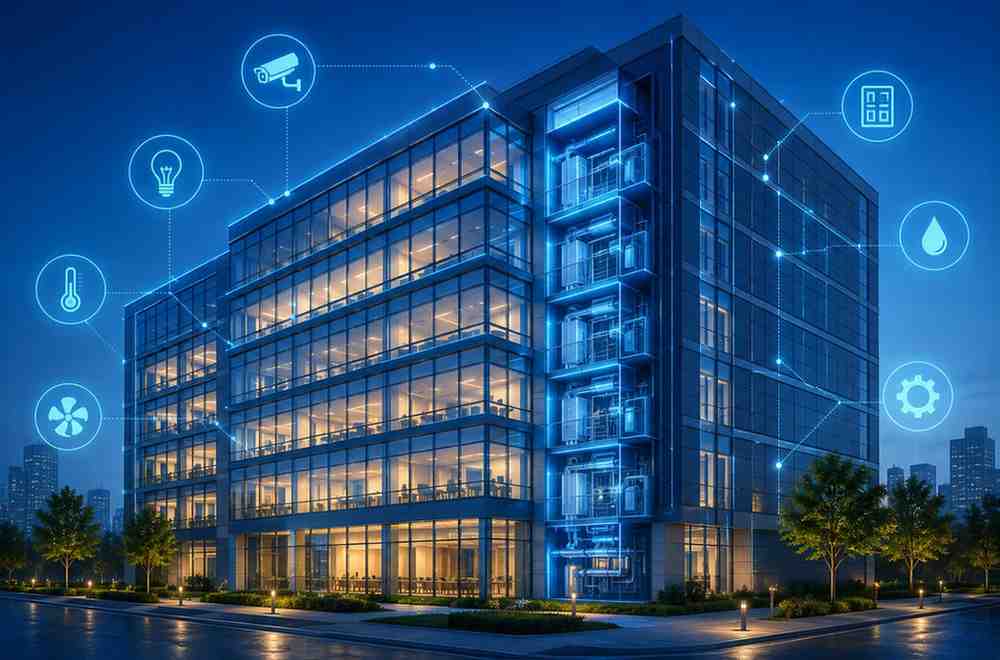
Smart building systems without digital protection
As projects adopt connected gates, Wi-Fi, access controls, office networks, and app-based services, weak cyber planning creates unnecessary exposure across management and tenant-facing systems.
Operational impact: access risk, system misuse, and weaker confidence in modern smart-property features.
Weak project marketing and digital trust
Today’s buyers often discover, compare, and judge projects online before visiting. A poorly marketed project with weak digital authority loses attention even when the location or product is good.
Operational impact: lower lead flow, weaker pre-launch momentum, and higher dependency on expensive offline outreach.
Late planning creates costly retrofits
When surveillance, cabling, Wi-Fi, access points, and monitoring rooms are planned after civil work is nearly complete, installation becomes less elegant and more expensive.
Operational impact: rework, visible compromises, and reduced long-term maintainability.
Blind spots in high-sensitivity zones
Basements, lift lobbies, clubhouses, tower entries, service corridors, and site storage areas often become risk points when camera planning is generic instead of use-based.
Operational impact: weaker dispute resolution, lower safety confidence, and avoidable operational ambiguity.
Commercial tenant network demands not met
Office parks and mixed-use assets increasingly need reliable building-level infrastructure that supports professional tenant operations, guest Wi-Fi, backend connectivity, and future upgrades.
Operational impact: lower tenant satisfaction, weaker retention, and reduced premium positioning.
Multi-phase projects without infrastructure scalability
Developers often add towers, new phases, amenities, or commercial sections over time, but many systems are not originally planned for clean expansion.
Operational impact: fragmented systems, higher capex later, and lower design consistency across the property.